Road markings in Ireland
Road markings carry instructions painted on the road itself, from continuous and broken white lines to yellow lines, box junctions and lane arrows. They tell you where you may overtake, where you may stop or park, and how to position your vehicle. Because the lines do the talking, misreading them is a common cause of mistakes, so the theory test expects you to interpret them correctly. Browse the road markings below, each with its meaning, then practise them in a real quiz.
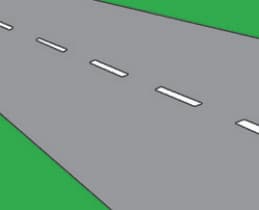
A driver must not cross the broken white line unless it is safe to do so.
A broken white line along the centre of the road means you must not cross the line unless it is safe to do so when overtaking or passing.
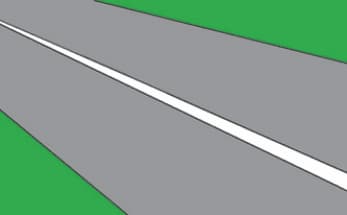
All traffic must keep to the left of the white line.
Where there is a continuous white line in the centre of the road, you are not permitted to: 1. Straddle or cross the white line; 2. Overtake another vehicle; 3. Perform a U-turn; or 4. Park on the road.
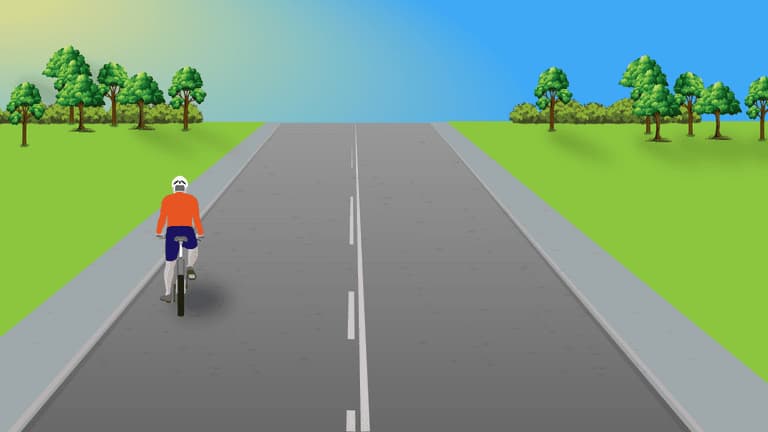
By crossing the broken white line.
Where there are two lines in the centre of the road, you must obey the one closest to you. So, if the closest line is a broken white line, by law you may overtake, so long as it is safe to do so.
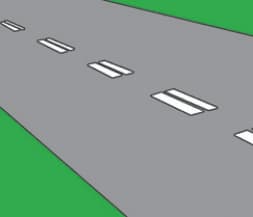
Continuous white lines ahead.
Double broken white lines along the centre of the road alert you to continuous white lines ahead. Do not cross them unless it is safe to do so.
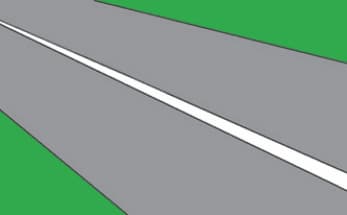
Drivers must keep left of the continuous white line.
A single continuous white line along the centre of the road means all traffic must keep to the left of the line. You are not permitted to overtake or perform a U-turn on this section of road.
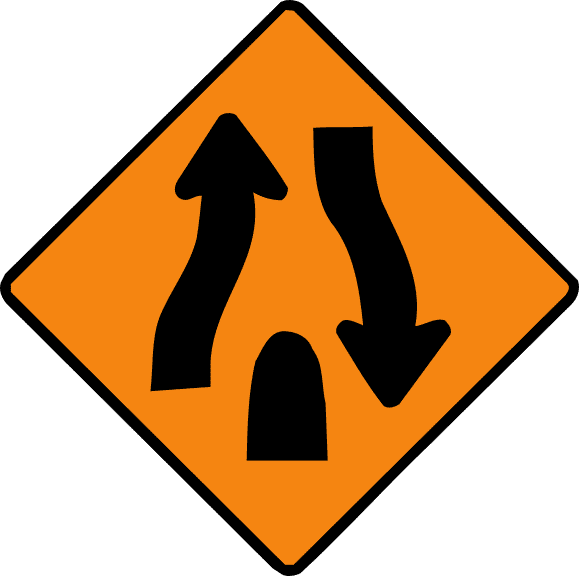
End of central reserve or obstruction.
This roadworks warning sign tells you that traffic previously separated by the central reserve or an obstruction will revert to two-way traffic.
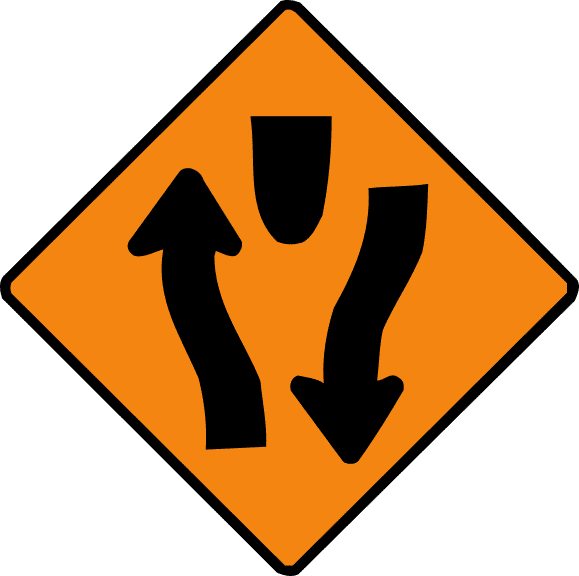
Start of central reserve or obstruction.
This roadworks warning sign tells you that two-way traffic will separate to avoid an obstruction.
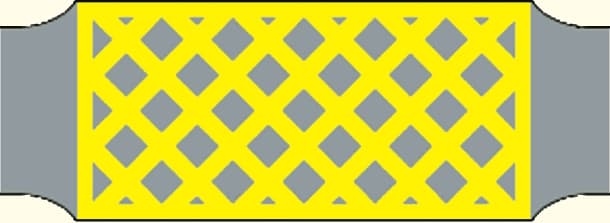
Traffic must not enter unless they can clear the box junction without stopping, or when turning right.
You must not enter the yellow box junction unless you can clear it without stopping or unless you are turning right and are prevented from doing so by oncoming traffic.